
Stunning Colosseum Rome Guide: Tickets, Tours & More for an Unforgettable Experience
Embarking on a journey through Roman history is like stepping into a time machine. No other architectural marvel captures the grandeur of ancient Rome quite like the magnificent Colosseum. This monument, the largest amphitheater ever built, still stands tall as a symbol of Rome's glorious past.
Understanding the significance of the Colosseum is understanding the essence of the Roman Empire. Its influence reaches beyond its historical context and resonates through modern-day tourism. Ticket sales, guided tours, and night revelries have transformed it into a prominent attraction for tourists worldwide.
This Colosseum Rome guide aims to provide an all-encompassing look at the history, tickets, tours, and surrounding attractions - offering an immersive journey that transcends the confines of the ancient amphitheater itself.
The Flavian Amphitheatre
Named after the Roman Emperor who commissioned its construction, the Flavian Amphitheatre (Anfiteatro Flavio), is home to the Colosseum. Its construction began in 70-72 AD under Emperor Vespasian and was completed by his successor, Titus, in 80 AD.
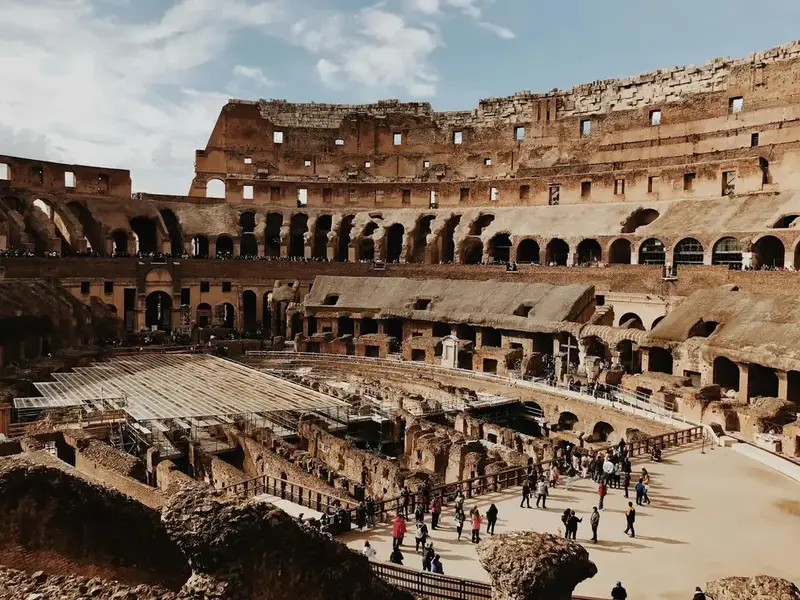
The name 'Colosseum' derives from the colossal size of the structure, which at its peak could seat up to 50,000 spectators. This grand amphitheater was used primarily for music concerts, animal hunts, and - most notoriously - gladiator battles.
Gladiator Battles in Ancient Rome
Gladiator battles were a staple form of entertainment in ancient Rome. Warriors, often slaves or prisoners of war, fought to the death for the amusement of the crowd. These brutal fights revealed much about Roman society's values, including their appreciation for violence, strategy, and physical prowess.
However, beneath the veneer of bloodlust and brutality, these battles were far more nuanced. They showcased Roman engineering prowess and technological innovation. The design of weapons, armor, and even the amphitheater itself spoke volumes about the empire's ingenuity and cultural aspirations.
Preparation for these battles was meticulous, enhancing the drama and spectacle of the matches. The combatants were often well-trained and ruthless, creating nail-biting, edge-of-your-seat entertainment.
Jubilee 2025 Rome and Its Impact on the Colosseum
As we approach the Jubilee 2025 Rome celebration, the impact of this significant event on the Colosseum will be immense. The Jubilee refers to a commemorative year, marking 1,985 years since the Colosseum was inaugurated (2025 - 70 AD = 1,985). This landmark occasion promises to increase global attention on the historical gem.
New exhibitions, events, and facilities will be added or improved to provide an enriched experience for tourists. For instance, nightlife experiences within the Colosseum, restricted to the general public for decades, will be inaugurated as part of the celebrations.
Accessing the Colosseum Underground and Arena Floor
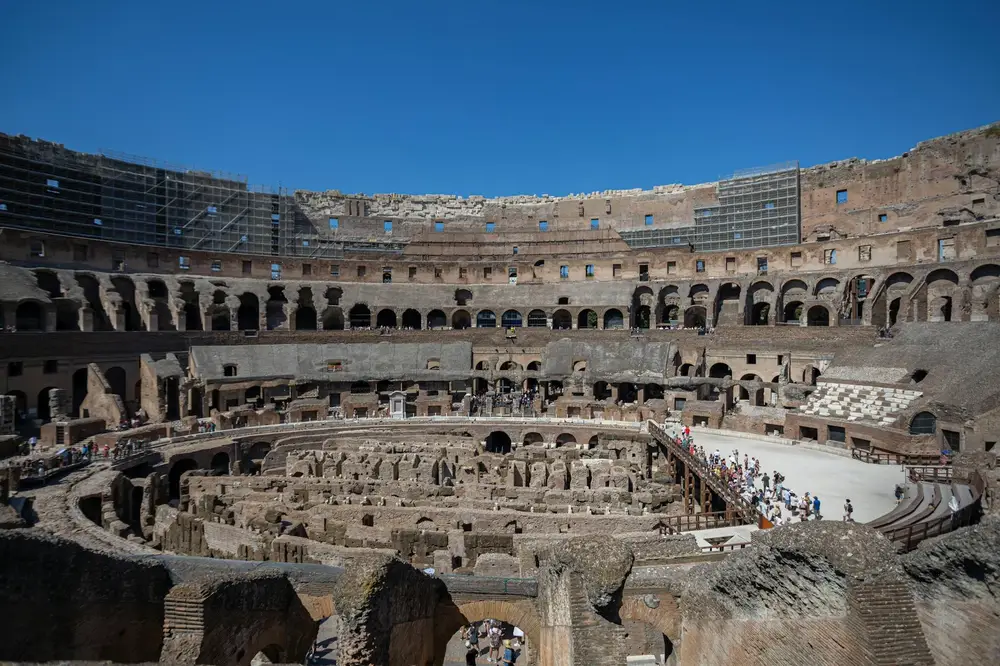
The Colosseum underground tour is a fascinating way to delve into its history. The labyrinth of tunnels once served as a "stagehand's theatre," where props and animals were hidden before being wheeled onto the arena floor.
Visitors to this wet and gloomy underworld can witness the details of past battles, viewing the other side of the highly choreographed spectacles of ancient Roman life. Additionally, guided tours with skip-the-line access offer an exclusive look at the living quarters of the gladiators.
The Roman Forum and Surrounding Attractions
More than just a tourist spot, the Colosseum sits amidst a treasure trove of ancient Roman history. Adjacent to the Colosseum is the Roman Forum, another definitive symbol of the Roman Empire. It showcases the ruins of ancient government buildings, a marketplace, and temples, offering a comprehensive understanding of the Roman way of life.
Minutes away is Palatine Hill, one of Rome's Seven Hills. Home to some of Rome's most famous living quarters, it houses UNESCO World Heritage sites and was the birthplace of the Roman Empire.
Lastly, the awe-inspiring Arch of Constantine bridges the Colosseum to the Roman Forum. This historical marvel, built in 315 AD, might not be as grandiose as the Colosseum, but it certainly carries its weight in Rome's history.
Securing Your Colosseum Tickets for 2026
As the Jubilee 2025 approaches, Rome's iconic Colosseum is set to become one of the most sought-after attractions worldwide. Therefore, now is the prime time to plan your visit to this ancient wonder.
Opt for the Rome City Pass Colosseum to secure your access, avoid queues, and access the best deals. However, irrespective of when you plan your visit, be prepared to be impressed by Rome's most iconic landmark - the Colosseum.
In conclusion, the Colosseum remains an enduring symbol of Rome's rich history and strategic innovation. Delving into its secrets and history through guided tours, tickets, and surrounding attractions truly unlocks the wonders of ancient Rome.
As Rome plans its celebrated Jubilee 2025, the Colosseum is set for an exciting new chapter in its rich, bloody history. So gear up to witness the magnificence of this emblematic monument and explore the Roman Empire's grandeur like never before.
Frequently Asked Questions
1. Is the Colosseum free?
No, you need a ticket. However, entry is free on the first Sunday of the month (expect huge lines).
2. Do I need a guide?
It is highly recommended to understand the history, gladiators, and architecture.
3. Can I skip the line?
Buying tickets online in advance allows you to use the reserved entrance, saving hours of waiting.
4. What is the Hypogeum?
It is the underground area where gladiators and animals were kept. Special tickets are needed to access it.
5. Is it near the Roman Forum?
Yes, the ticket usually includes entry to the Roman Forum and Palatine Hill next door.


Discussion