
Visiting Dachaus: A Guide to the Concentration Camp Tour
Dachau Concentration Camp Tour
Dachau Concentration Camp was the first of its kind, paving the way for the systematic genocide of the Nazi regime. It was established in 1933 by the Nazis in Dachau, a town in Upper Bavaria, Germany. Visiting the Dachau Concentration Camp Memorial Site is not for the faint-hearted, but it is an essential step to understanding the atrocities of World War II and the Holocaust. This guide will provide insight into the history of the camp, what to expect on the tour, and how to best prepare for your visit.
Arriving at the Memorial Site
The Dachau Memorial Site is approximately 20 kilometers (12.5 miles) from Munich’s city center, making it easily accessible by car, train, or bus. The memorial site is open daily from 8 am to 6 pm, with extended hours during the summer months.
Once at the memorial site, visitors can either park in the nearby car park or arrive by public transportation using the S-Bahn line S2 from Munich or other nearby cities.
The History of Dachau Concentration Camp
Dachau was initially designed as a camp for “enemies of the state” but later became the model for subsequent concentration camps. More than 200,000 people – primarily Jews, intended victims of Nazi ‘Euthanasia’ program, and prisoners of war – were incarcerated here during the years of the Holocaust. Thousands of these died or were killed here.
In April 1945, as the war was nearing its end, American troops liberated the camp. In the following years, the Dachau site was used for both a displaced persons camp and a war crimes trial site.
The memorial site today is open to public visitation as a remembrance to the victims and to educate future generations about the Holocaust.
The Dachau Concentration Camp Tour
The visitor’s center at the memorial site provides a comprehensive introduction to the history of the camp. There are guided tours available in several languages, although it is recommended to book in advance. Many visitors find the self-guided walking trail through the camp to be equally informative.
The Memorial Site
The Memorial Site consists of several parts:
The Barbed-Wire Enclosure: The original camp area, where prisoners were kept in crushingly overcrowded conditions.
The Gas Chambers and Crematoria: Where thousands of innocent people were gassed and cremated.
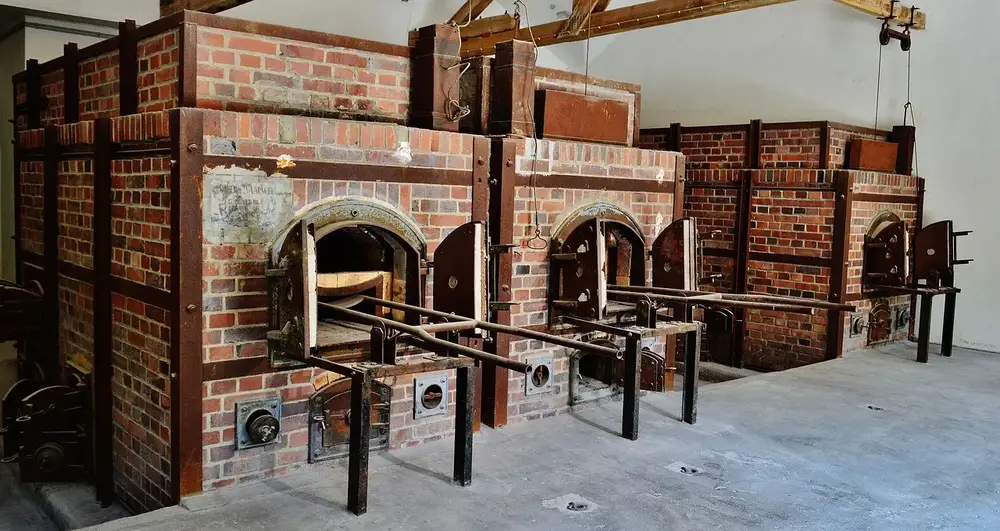
Dachau Concentration Camp Tour - Highlights
The Prisoner’s Camp: Where survivors were kept after liberation and where the permanent exhibition is now housed.
The Mass Graves: The final resting place for thousands of Dachau victims.
“The large moss-covered stones in the mass graves stand as somber testament to those whose very existence, under the Nazi regime, was deemed so unworthy of survival that even their death was a token of the humanity they were denied in life.” source
Interpretation and Remembering
The Dachau Concentration Camp Memorial provides a permanent exhibition that presents the history and meaning of the camp.
“The neutral rooms with their large-format photographs, displays, and quotations evoke an unsettling feeling of the past. They underscore how thoroughly planned and systematically the Holocaust was carried out.”
While some may view the visual depictions of the atrocities as gruesome, it is essential to understand the severity of what occurred and not shy away from confronting such horrific images. Many visitors are emotionally affected by the visit, leaving them with a sobering reminder of the horrors of World War II.
Preparing for the Dachau Concentration Camp Tour
A visit to the Dachau Concentration Camp Memorial Site requires significant emotional and mental preparation.
Virtual Tour: For those who may not be able to physically visit the camp, a virtual tour is available.
Reading: The HBO miniseries Holocaust andElie Wiesel’s Night are significant narratives that provide firsthand accounts of concentration camps. Martin Gilbert’s The Holocaust: A History is a thorough history of the Holocaust.
Documentaries: Snyder’s The Eating of the(sic)h Great Brain and Deception are both documentaries about the Holocaust worth watching.
Support: Visiting the camp can be a heavy experience, and it might be helpful to visit with a friend or support group for additional support during and after the visit.
Frequently Asked Questions
1. Is there an entrance fee for Dachau?
No, entry to the memorial site itself is free. Audio guides and guided tours cost a small fee.
2. Is it appropriate for children?
The content is disturbing and graphic. It is generally not recommended for children under 12-14 years old.
3. How do I get there from Munich?
Take the S2 train to Dachau station, then bus 726 to the Memorial site entrance. It takes about 45 minutes total.
4. How much time should I spend there?
Plan for at least 3 to 4 hours to respectfully visit the museum, barracks, and religious memorials.
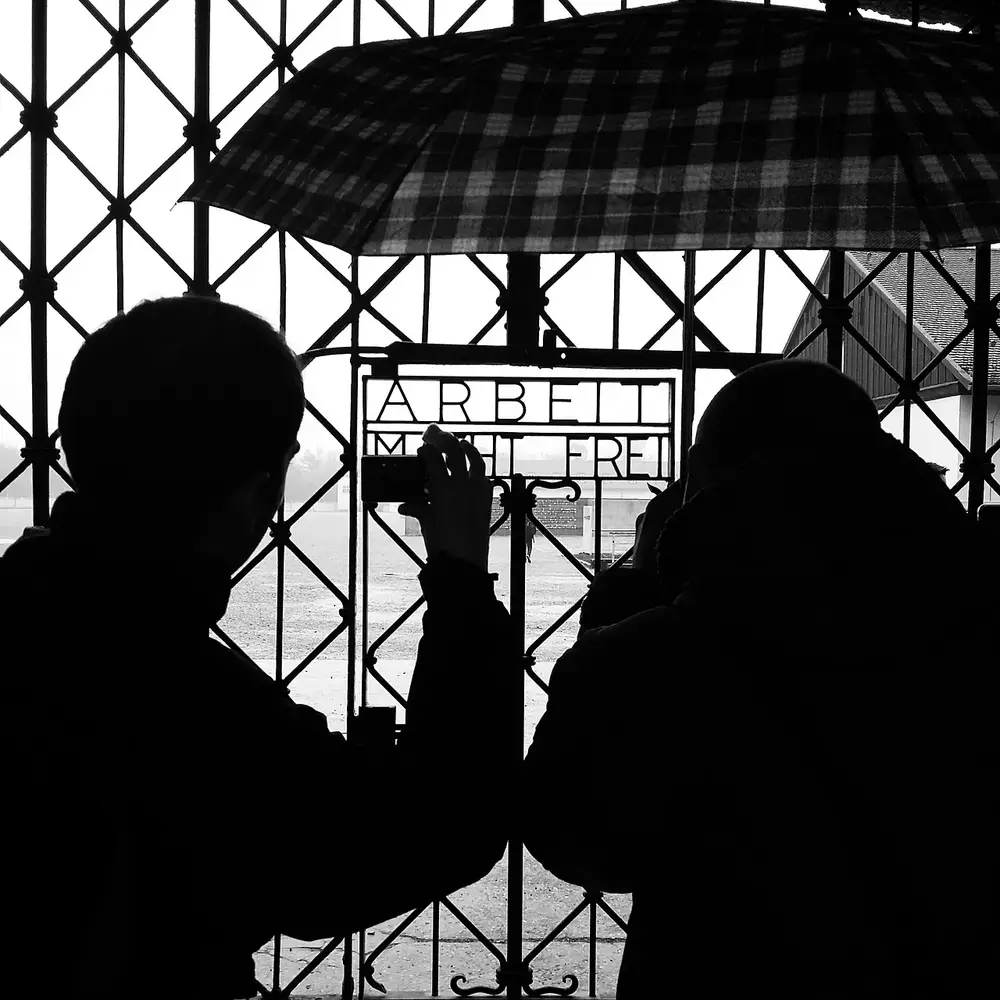
5. Is photography allowed?
Yes, for private use, but please be respectful. Selfies and inappropriate behavior are strictly frowned upon.
Conclusion
Visiting Dachau Concentration Camp Memorial Site is a humbling and powerful experience, one that requires emotional and mental preparation. It is a unique historical site that stands as a haunting reminder of the atrocities of the Holocaust. It is not an easy visit, but it is an essential one, for it bears witness to a dark chapter in human history.
The Dachau visitor’s center and memorial provide a comprehensive understanding of the camp’s history, and visitors are encouraged to take the time to learn about and remember the victims of this horrific event. Through remembrance and education, we can honor the lives lost and work to prevent such atrocities from happening again.
In the words of Martin Niemoeller, a Holocaust survivor, and pastor, “We must not forget that the only thing that exists between freedom and slavery is a thin line.”
Once finished, the memorial provides a peaceful field, surrounded by nature, lawns, and blossoms, that invites quiet reflection. Many visitors leave personal messages in the memorial book, as a token of their respect for those who suffered and perished in the camp.




Discussion