
Walking the Freedom Trail: A Complete Guide to History and Things to Do in Boston
Boston has a rich history that dates back to the American Revolution. One way to immerse yourself in the city’s past is by exploring the Freedom Trail, a 2.5-mile pathway that leads you through 16 historically significant sites. This self-guided tour will take you on a journey through the birthplace of the American Revolution, providing a unique experience that combines history with outdoor exploration. Whether you’re a history buff, a casual visitor, or a local looking to brush up on your knowledge, the Freedom Trail is a must-see attraction that offers something for everyone.
Getting Started
Before embarking on your journey, it’s essential to know where the Freedom Trail begins and what to expect along the way. You can easily find the trail starting from the Boston Common, but for ease, most people start the tour at the visitor center on the Fourth JsonRequest Information Center. Here, you can pick up a detailed map, as well as get information on guided tours and other attractions in the area. Guided tours are a great option if you want a more in-depth experience or don’t want to worry about navigating the trail yourself.
Points of Interest
Now that you know where to start, let’s delve into some of the most significant stops that you’ll encounter along the Freedom Trail.
Boston Common Park
The Boston Common is not only where the trail begins but is also one of the oldest public parks in the United States. Established in 1634, the park has played a significant role in the development of the city, serving as a location for numerous events and gatherings.
Massachusetts State House
Just a short walk from Boston Common is the Massachusetts State House, where the grandiose gold-plated dome stands out as a symbol of democracy. Construction began on this building in 1797, and it remains in use today, with ongoing restoration projects aimed at preserving its antique charm.
Park Street Church
Continuing along the Freedom Trail, you’ll come across the Park Street Church, a landmark that dates back to 1819. Known as the “Mother Church of Boston,” this property has played a significant role in the city’s religious history, with many prominent evangelists preaching here.
Granary Burying Ground
The Granary Burying Ground is a historic site that holds the remains of many notable figures from Boston’s past, such as Paul Revere and Samuel Adams. This place serves as a testament to the city’s historical significance and is a must-visit location for any fan of revolutionary history.
St. Paul’s Cathedral
The next significant stop is St. Paul’s Cathedral, which dates back to 1828. The cathedral holds historical importance as the resting place of several important figures from the Revolutionary period. Additionally, it remains an active seat of religious practice to this day.
Old State House
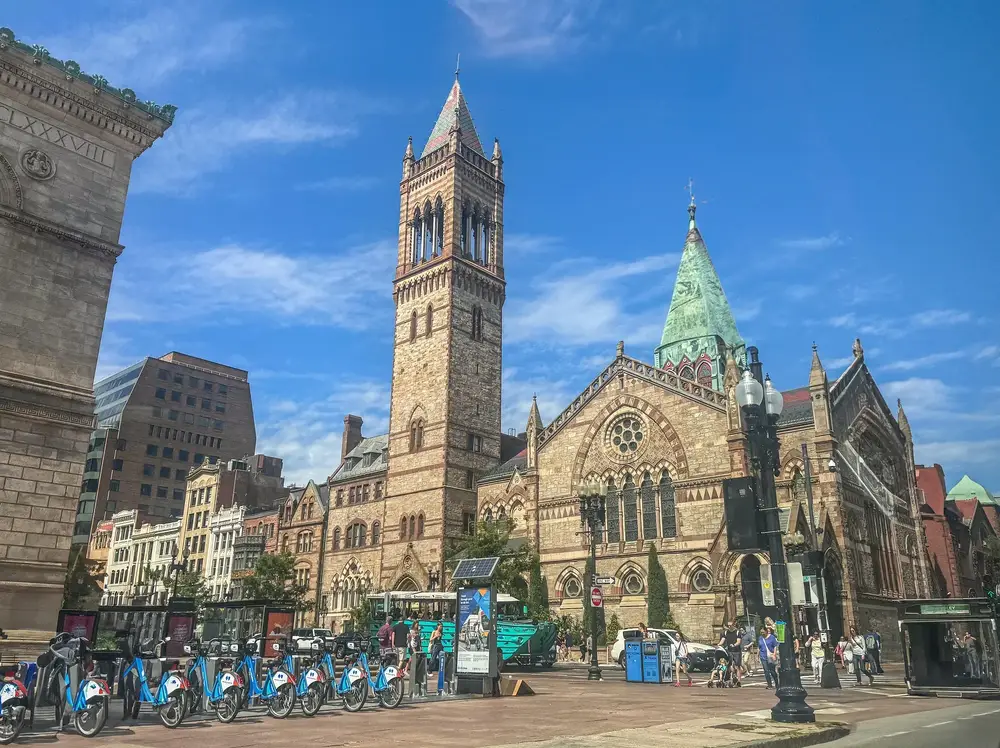
The Old State House is arguably one of the most popular sites on the Freedom Trail. Built between 1711 and 1713, this building served as the seat of Massachusetts government for over 80 years. The Old State House is considered a symbol of the American Revolution, and visitors can now experience the Boston Tea Party Ships and Museum, located just steps away from the Old State House.
Faneuil Hall
Faneuil Hall is the next location on the trail, known as the “Birthplace of American Independence.” Originally a marketplace, the building gained prominence as a meeting place for Revolutionary leaders. Faneuil Hall now serves as a marketplace and cultural center, showcasing various performances, festivals, and events.
Quincy Market
Quincy Market, adjacent to Faneuil Hall, offers an incredible culinary experience with its range of food vendors and shops. The market is a must-visit location for foodies who want to experience the best of New England cuisine, including classic dishes such as seafood chowder and Boston cream pie.
The Liberty Tree
The Liberty Tree is another symbol of the Revolutionary era, just a short walk away from Quincy Market. This specific tree once served as a meeting place for revolutionary activists and marked the site where the famous “Midnight Ride” by Paul Revere began.
Visitors Center and Union Oyster House
Next to the Liberty Tree, you’ll find the Fourth Regiment Armory, which now serves as the Freedom Trail Visitor Center. Continuing along the trail, you’ll come across the Union Oyster House, a historic seafood establishment dating back to 1826 - and home to the oldest continuously operating oyster bar in the United States.
Old Corner Bookstore
Adjacent to the Union Oyster House is the historic Old Corner Bookstore, established in 1721. This quaint shop has played significant roles in promoting literature and culture in Boston and remains one of the city’s charming sites.
King’s Chapel and Burying Ground
King’s Chapel and Burying Ground hold the remains of victims from the Great Molasses Flood of 1919, the city’s most catastrophic disaster. The building itself dates back to 1714 and is a prime example of British Colonial architecture.
Benjamin Franklin Statue and Post Office
Finally, the last stop on the Freedom Trail is a statue of Benjamin Franklin, one of the most significant figures in American history. Franklin famously never went back to the United States after relocating to France and opted to stay abroad. This statue pays homage to his legacy and contributions. Just around the corner from the Franklin statue is the Benjamin Franklin Postal Relief Post Office, where you can purchase canceled stamps and souvenirs.
Frequently Asked Questions
1. What is the Freedom Trail?
It's a 2.5-mile red-lined route that leads to 16 historically significant sites, including the Paul Revere House and Old North Church.
2. When is the best time to visit Boston?
June to October. Fall foliage in New England is spectacular in October. Summers are warm and popular for walking tours.
3. Do I need a car in Boston?
No, Boston is a very walkable city ('America's Walking City'). The 'T' (subway) is efficient and parking is very expensive and difficult.
4. What isn't to be missed in Boston?
Walking the Freedom Trail, visiting Fenway Park, exploring Beacon Hill, and eating seafood (clam chowder and lobster rolls) at Quincy Market.
5. Where is the best area to stay?
Back Bay or Downtown are central and convenient. Seaport is modern and trendy, while Cambridge offers a university vibe near Harvard and MIT.
Conclusion
Walking the Freedom Trail is an immersive experience that offers an in-depth understanding of Boston’s rich history. Along the way, you’ll also find pockets of the city’s unique culture, with restaurants, shops, and other experiences to discover. As you traverse the trail, you’ll be walking in the footsteps of revolutionary leaders who helped shape the United States, gaining a deeper appreciation for the city and its history. The next time you’re in Boston, consider setting aside some time to walk the Freedom Trail and discover one of the most historically significant sites in the United States.

Discussion